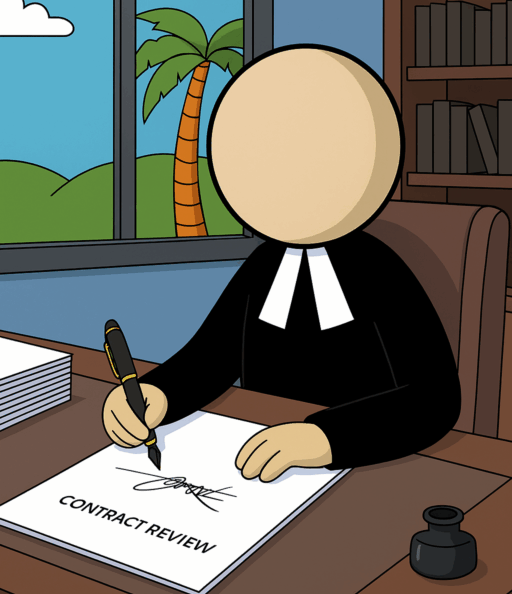
Our daily lives consist of a series of experiences. Some of these come in the form of agreements or contracts that put us in a legal relationship that we don’t think about most times when we sign on that line.
Now, if you ask me, a lawyer, I’d be tempted to tell you that there is NO agreement that you should sign on the dotted line, without first engaging your attorney. The reality though, is that the chances of you doing exactly that are likely if not certain. You will probably find yourself signing an agreement or contract that your lawyer has not seen. There are a number of reasons why that would happen though but that’s not what I am going to talk about today.
In the real world, where life moves at a pace faster than you can plan or prepare for, there will be huge temptation to just give a quick look at the words on the paper, sign the paper, and move on with life. But please be mindful! Signing ANY contract without a proper legal review can lead to headaches, a hole in your purse or pockets, and the unplanned experience of your name being shouted at full volume by a court officer when your breach of contract court case comes up with you as the named defendant.
This is NOT legal advice. What it is, is my opinion on what I think are five (5) types of agreements you should try to avoid signing without first consulting with a qualified attorney-at-law that you trust. If you don’t have such a lawyer, take my advice and get one and keep their contact close.
1. Any Agreement with a Duration Beyond One (1) Year
This one is by no means a rule. It’s more like a measuring stick. I think a one (1) year commitment is the perfect measure to begin the conversation for thinking twice before committing to an agreement for a single day beyond a year. There must be a time measure for you to think three times before you sign. It might be a service contract for your business operation or a cleaning service agreement for a residence. Anything up to and more than a year needs a careful look and perhaps the views of a legal professional. Long contract durations tend to mean more complex terms are either there that need review or are missing and need inclusion to protect you. Longer contract periods usually mean that there is the potential for changes in circumstances that need to be accounted for. Extended contract periods can mean greater financial commitment. Extended contract periods can also mean that there needs to be consideration for how the contract may be terminated. A lawyer can help you understand the long-term implications, identify any exit clauses that are included or are necessary and discuss renewal terms and whether they may be in your favour. Most importantly, your lawyer can help ensure that you and your interests are protected as best as possible if things don’t go as planned.
2. Any Agreement Where a Deposit is Involved
From putting down a deposit to secure the purchase of a car, to securing an apartment for rent or a house for sale, deposits are a common part of many contracts. They serve a purpose and can be a useful tool to both parties in negotiations and in closing the agreement. The thing is, the terms surrounding a deposit can be very tricky. Who holds it? What are the conditions for its return? What deductions can be made from it? What happens if the agreement falls through? A lawyer will give a good review of the clauses to ensure your deposit is protected and that you fully understand the circumstances under which you made it and that you are fully aware of the chances and the circumstances under which you might lose it. Take my silly advice and be careful with your hard-earned money. Treat every deposit with the highest level of scrutiny possible, and make a deposit only with your lawyers advice.
3. Any Agreement Which Mentions Any Section of a Law
If an agreement references specific sections, acts, or statutes of law (e.g., “in accordance with Section 28 of the Land Registration Act Chapter 5.01” or “pursuant to the Article 1387 of the Civil Code”), it should be an automatic trigger for you to seek legal counsel. These references indicate that the agreement is dealing with specific areas of law that have been written down and applied to your circumstances. Without legal training, formal or otherwise, it is highly unlikely that you would fully understand the implications of these specific legal provisions. You need a lawyer to help you interpret these sections. You need an attorney to help you explain how they impact your rights and obligations within the agreement. It’s as simple as that.
4. Any Agreement Already Signed by the Other Party Before You See It
If a document arrives in your hand with the other party’s signature already in place, it can create a sense of urgency or finality that could work against you if you are not careful. The temptation will exist to just add your signature to complete the transaction. Let me just close things off and be done with it, right? However, this is really not the best practice. A contract is supposed to represent a space where both minds have met. A contract that is already partially executed means that one party is satisfied enough to sign. The other party must be satisfied as well. With that said, you must ALWAYS move on the notion that the already signed agreement may work against you, either by design or by circumstances. The contract may very well contain terms that were added or changed during the time between its creation and any review that you might have had prior to its creation. Not to mention between any time before it was written and its arrival in your hands. A good lawyer will review the agreement to ensure it aligns with your understanding of the terms, and that no unexpected clauses have been inserted. It’s a critical step to take before you add your signature and make the document legally binding on yourself.
5. Any Agreement Concerning Use, Lease, Sale or Purchase of Property
This might perhaps be the most critical category, especially in growing and dynamic property markets, like the ones that exists in Saint Lucia and the rest of our West Indian states. There are clearly established rules that apply to property agreements. There are legal points and terms that apply whether you have knowledge of them or not. Considerable financial commitment applies whether you are by buying, selling, short-term renting and long-term leasing. Deeds, Mortgages, Leases, Tenancy Agreements, Contracts for Sale and other land related documents are filled with legal jargon and sometimes hard to pronounce, and not so easy to Google, legal terms that can have considerable consequences if you misread, misunderstand, or just plain miss them altogether. ALWAYS engage an Attorney-at-law for property-related matters. Trust me on that one.
While it might seem like an added expense, the cost of not seeking legal advice on critical agreements can far outweigh the initial seeming convenience of not doing so. And when they do outweigh, trust and believe that your chances of holding the stick’s short end are highly likely. When in doubt, always consult a legal professional. They are there to protect your interests and ensure you understand exactly what it is that you’re signing.
Do you have any experiences with contracts you wish you had reviewed before signing? Share them in the comments below if your don’t mind! Keep it clean, respectful and there’s no need to name and shame!
Thank you for reading.
Jayde Jean Esq. Soon to be your FAVOURITE Attorney.
Leave a Comment